 Image 1 of 4
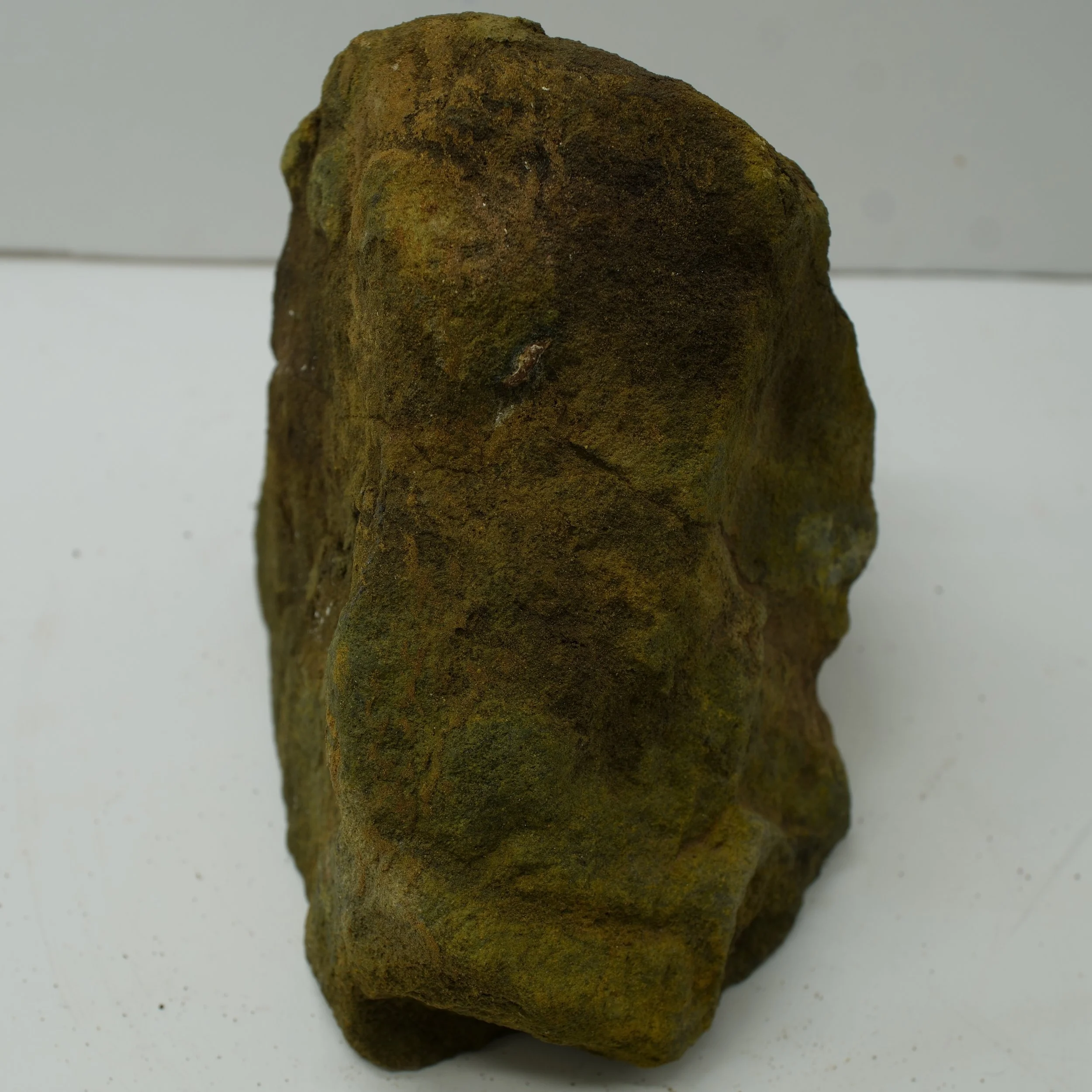 Image 2 of 4
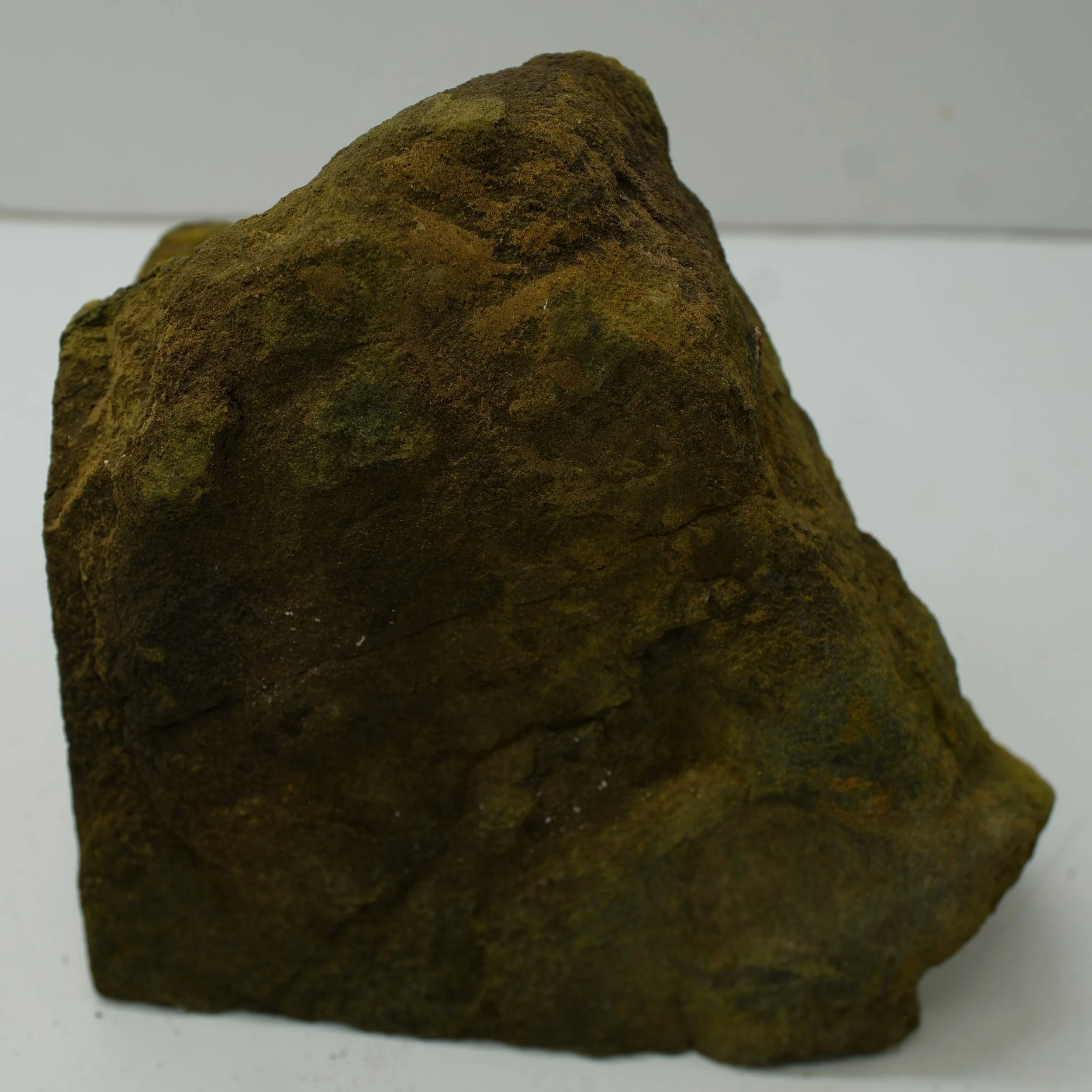 Image 3 of 4
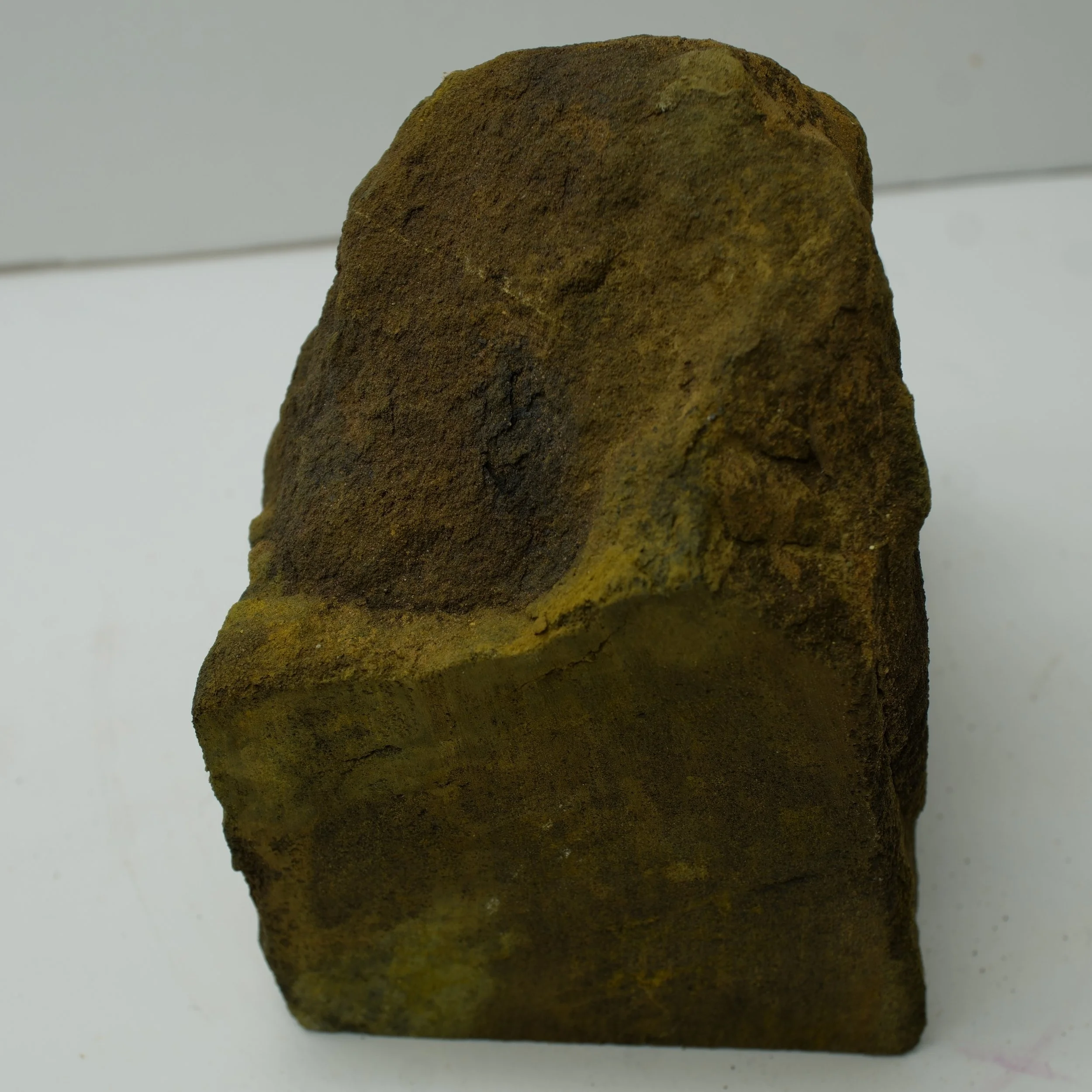 Image 4 of 4
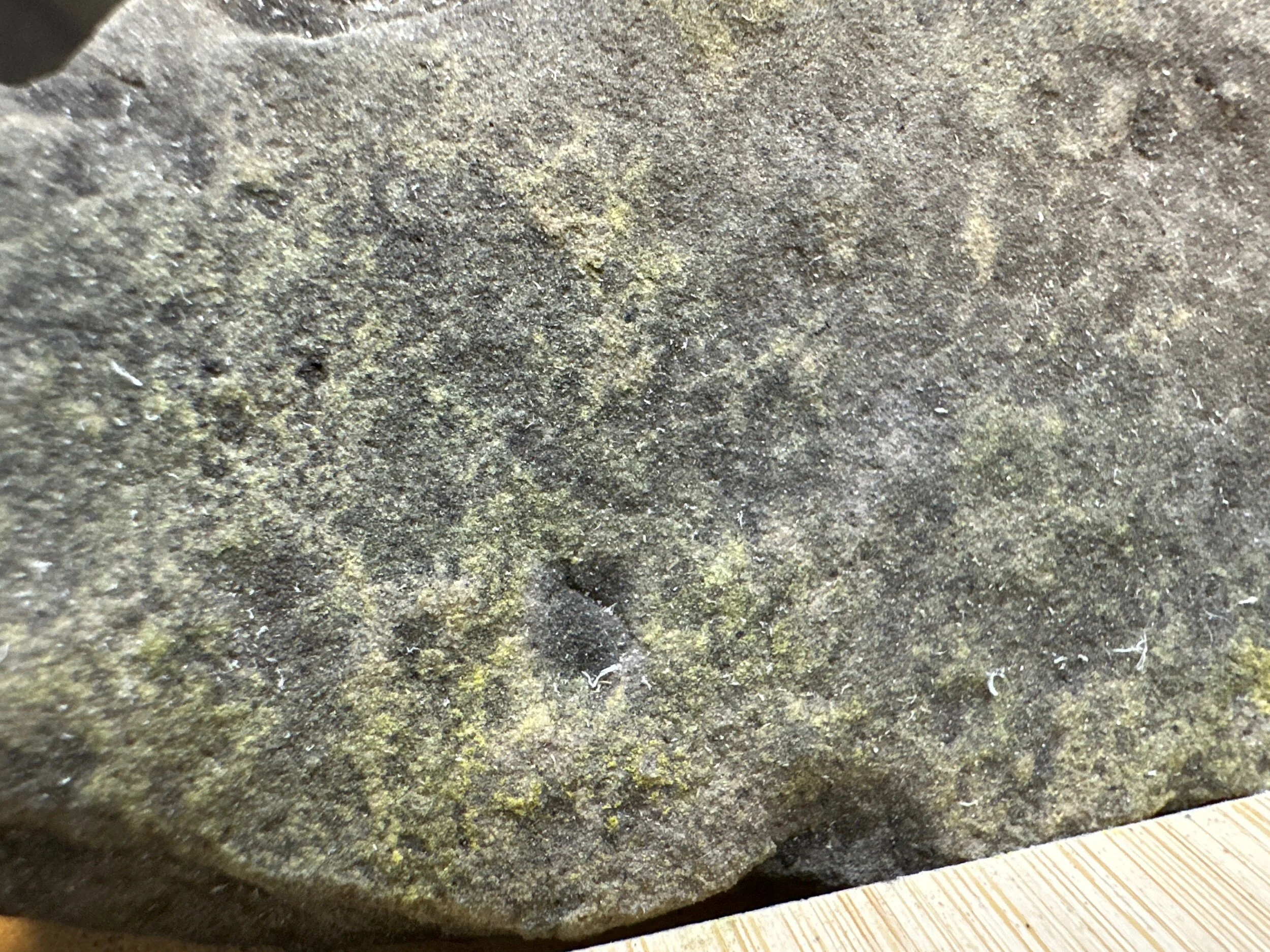
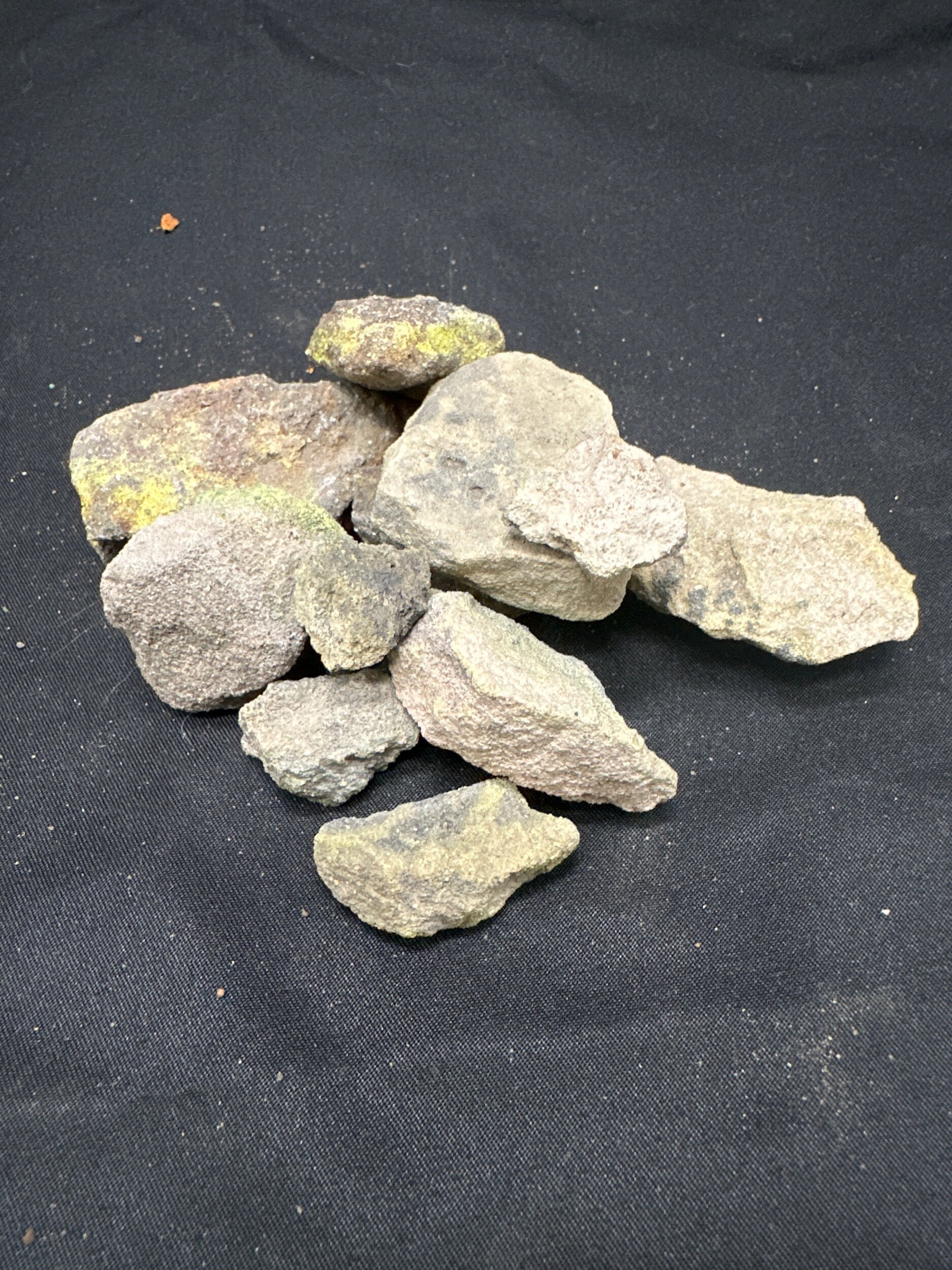
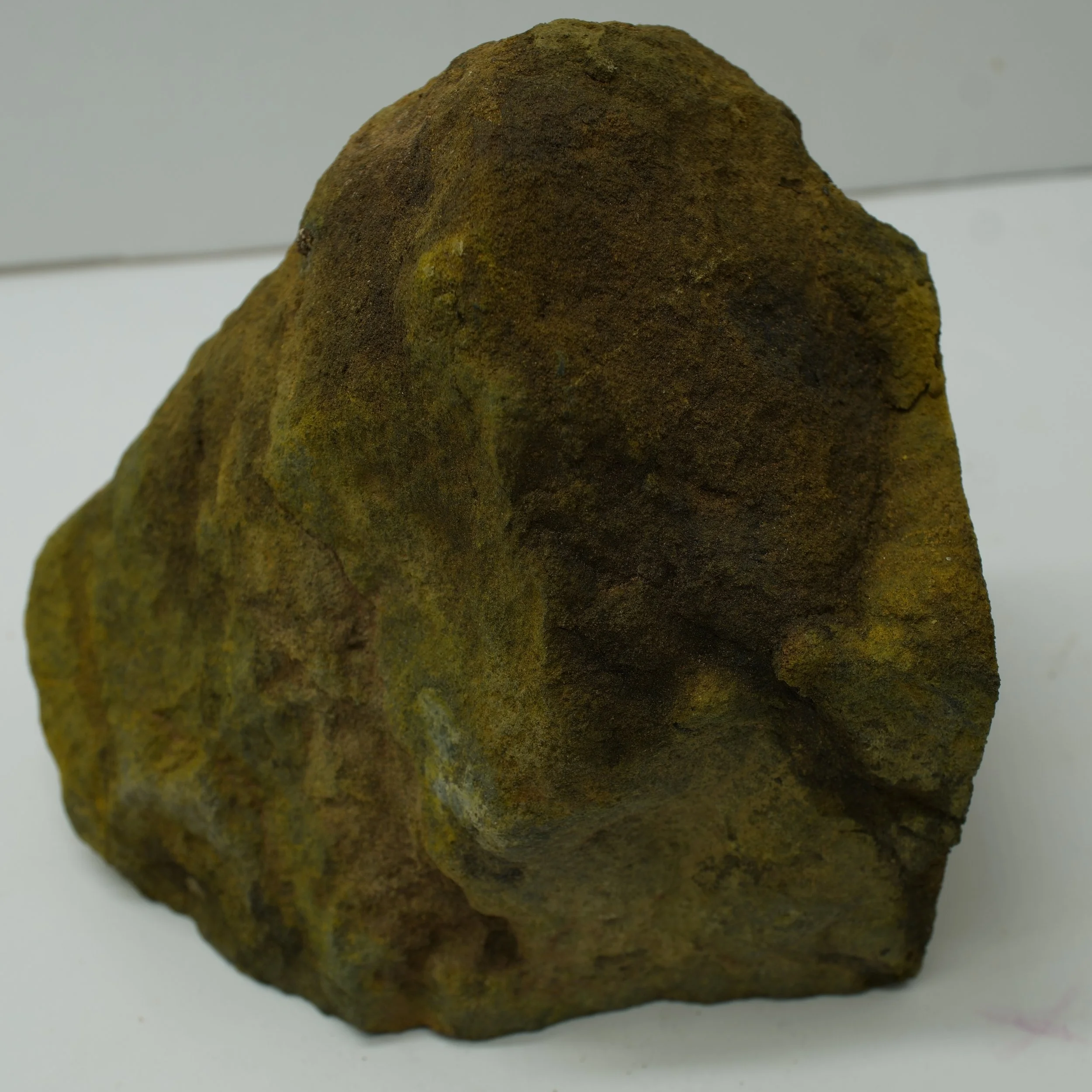
This is a large, visually dominant uranium ore specimen exhibiting classic Colorado Plateau–style secondary uranium mineralization. The surface is coated in mustard-yellow to olive-green uranium vanadates, consistent with carnotite / tyuyamunite–group minerals, distributed through a sandstone host. The coloration is natural, earthy, and extensive — not just isolated hot spots — giving this piece excellent shelf presence.
At over four pounds, this is a true bulk specimen rather than a fragment or cut face. The rounded, weathered geometry and uniform mineral staining strongly suggest long-term natural exposure and oxidation, exactly what collectors expect from authentic Utah uranium localities. Activity is solid for its size, making it a reliable comparison piece and an excellent educational example of secondary uranium mineral formation.
Weight: 4 lb (≈ 1.8 kg)
Dimensions: approx. 5 × 5 × 3 inches (≈ 12.7 × 12.7 × 7.6 cm)
Locality: Utah, USA (Colorado Plateau region)
Condition: Natural, Two cut faces, no stabilization or enhancement
Measured Activity: ~30,000 CPM
Instrument: Pancake Geiger probe
UV Response: None observed
Shipping: Ships legally under UN 2911 – Excepted Radioactive Material
⚠️ Radiation Notice:
This specimen emits measurable ionizing radiation. Avoid prolonged handling and display appropriately.
Geologic context: Utah’s sandstone-hosted uranium deposits are among the most historically significant uranium provinces in the United States, formed by groundwater transport and precipitation of uranium-vanadium minerals.
Non-uranium minerals present: Iron oxides (goethite/limonite), sandstone matrix
Activity level: Moderate–Strong relative to size
Best use cases:
Educational display
Size vs. CPM comparison specimen
Visual reference for secondary uranium mineralization
Best for:
Uranium collectors wanting a large, affordable display piece
Element collectors seeking a visually obvious uranium-bearing rock
Educators and demonstrators needing durable, stable material
This is a large, visually dominant uranium ore specimen exhibiting classic Colorado Plateau–style secondary uranium mineralization. The surface is coated in mustard-yellow to olive-green uranium vanadates, consistent with carnotite / tyuyamunite–group minerals, distributed through a sandstone host. The coloration is natural, earthy, and extensive — not just isolated hot spots — giving this piece excellent shelf presence.
At over four pounds, this is a true bulk specimen rather than a fragment or cut face. The rounded, weathered geometry and uniform mineral staining strongly suggest long-term natural exposure and oxidation, exactly what collectors expect from authentic Utah uranium localities. Activity is solid for its size, making it a reliable comparison piece and an excellent educational example of secondary uranium mineral formation.
Weight: 4 lb (≈ 1.8 kg)
Dimensions: approx. 5 × 5 × 3 inches (≈ 12.7 × 12.7 × 7.6 cm)
Locality: Utah, USA (Colorado Plateau region)
Condition: Natural, Two cut faces, no stabilization or enhancement
Measured Activity: ~30,000 CPM
Instrument: Pancake Geiger probe
UV Response: None observed
Shipping: Ships legally under UN 2911 – Excepted Radioactive Material
⚠️ Radiation Notice:
This specimen emits measurable ionizing radiation. Avoid prolonged handling and display appropriately.
Geologic context: Utah’s sandstone-hosted uranium deposits are among the most historically significant uranium provinces in the United States, formed by groundwater transport and precipitation of uranium-vanadium minerals.
Non-uranium minerals present: Iron oxides (goethite/limonite), sandstone matrix
Activity level: Moderate–Strong relative to size
Best use cases:
Educational display
Size vs. CPM comparison specimen
Visual reference for secondary uranium mineralization
Best for:
Uranium collectors wanting a large, affordable display piece
Element collectors seeking a visually obvious uranium-bearing rock
Educators and demonstrators needing durable, stable material