 Image 1 of 3
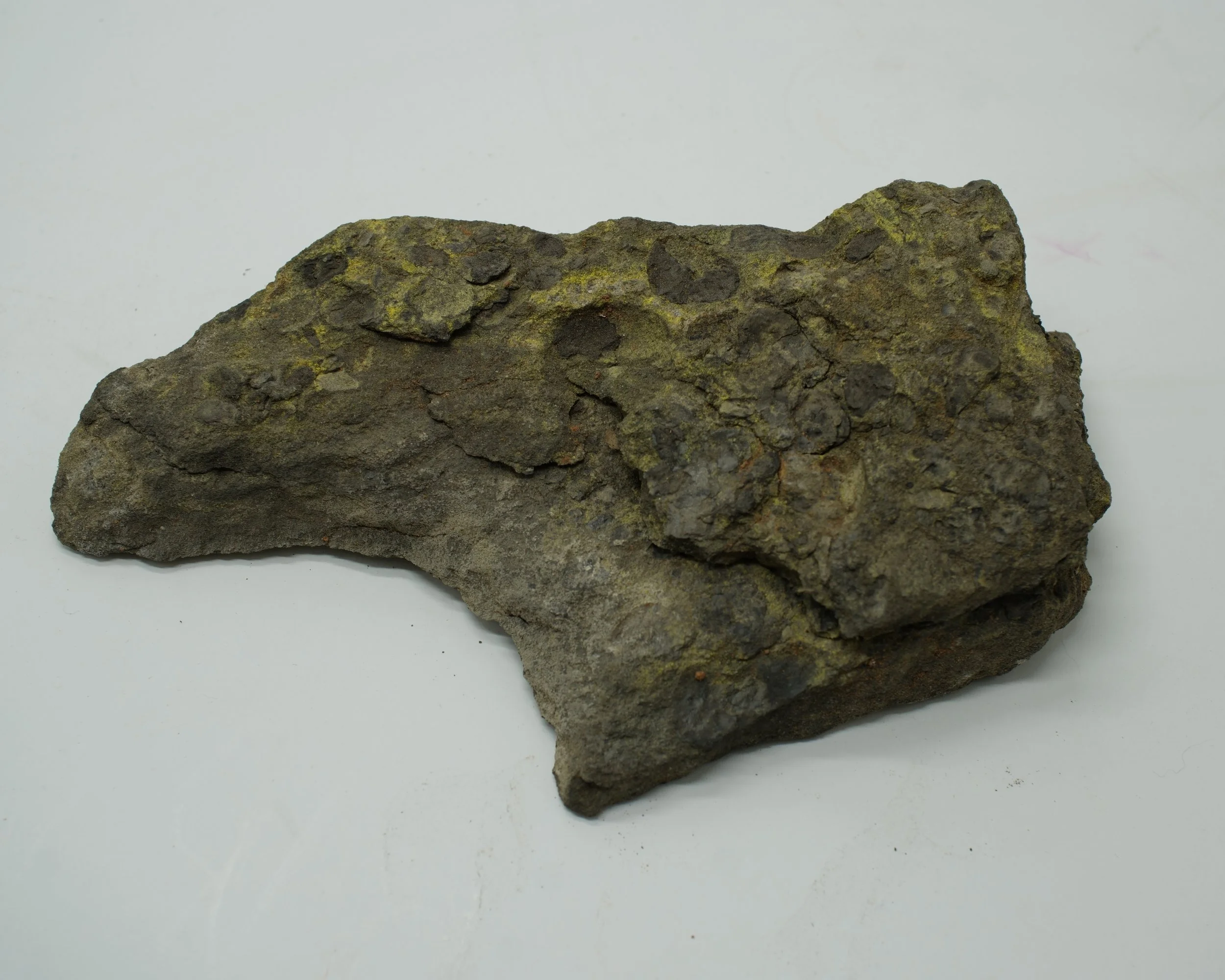 Image 2 of 3
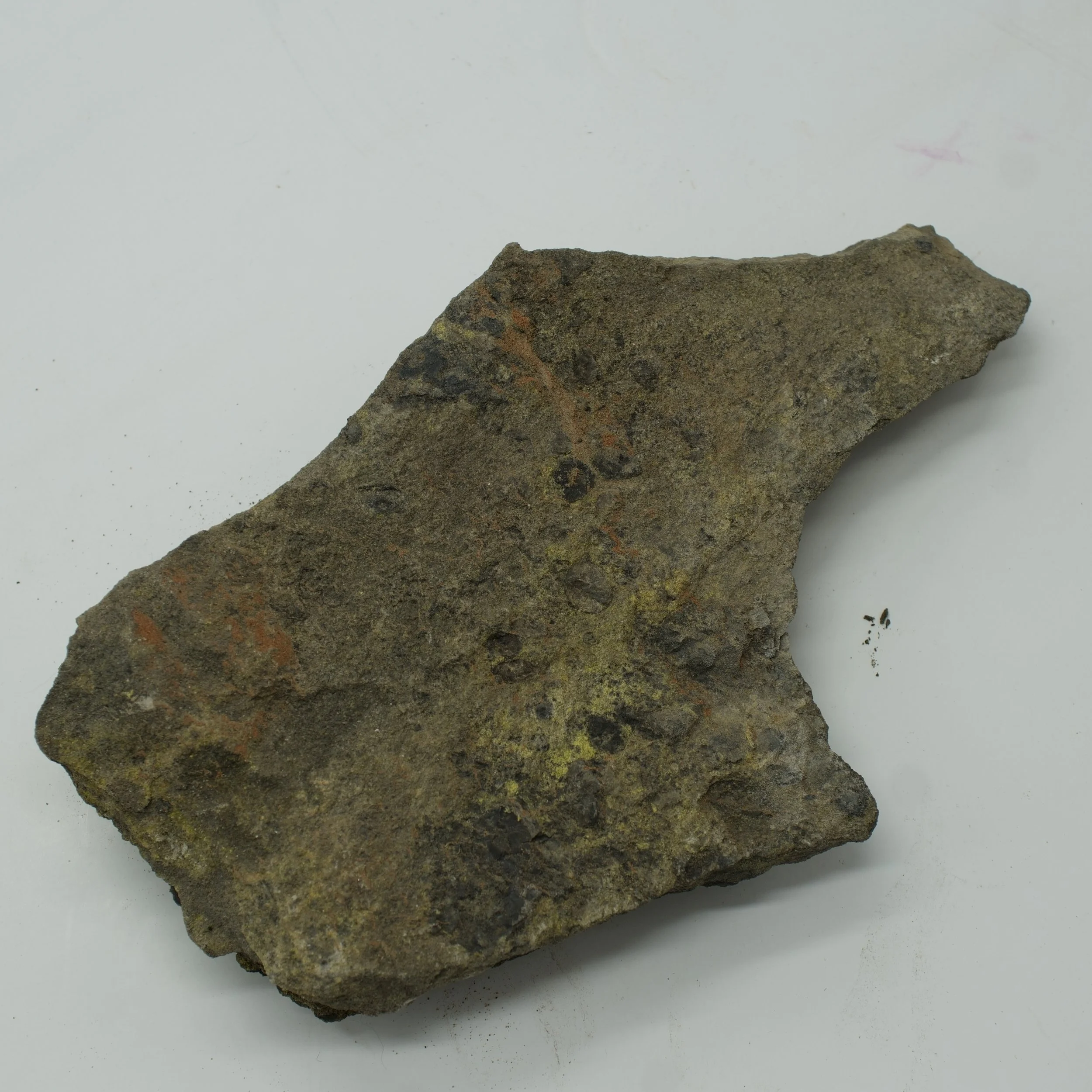 Image 3 of 3
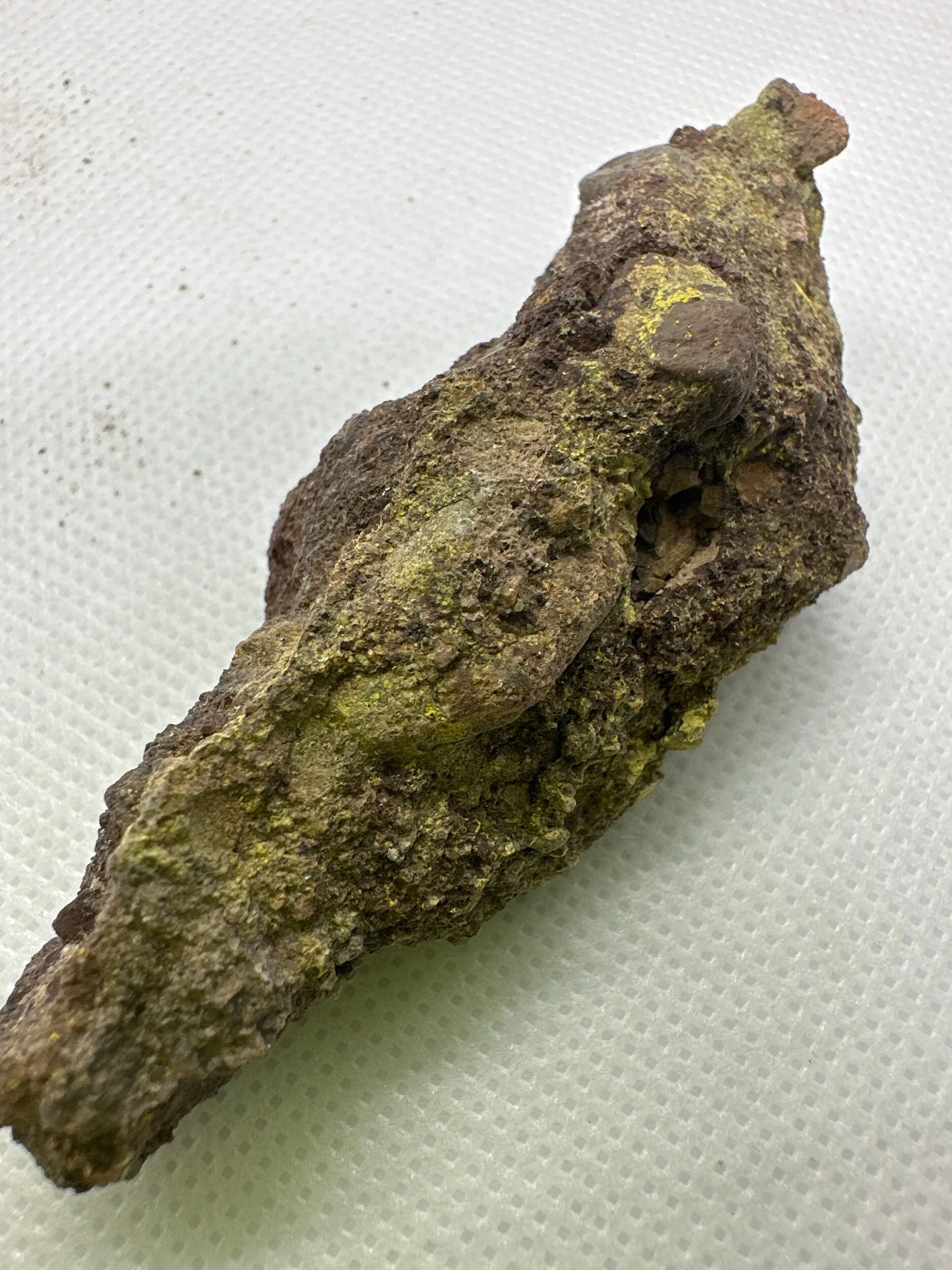
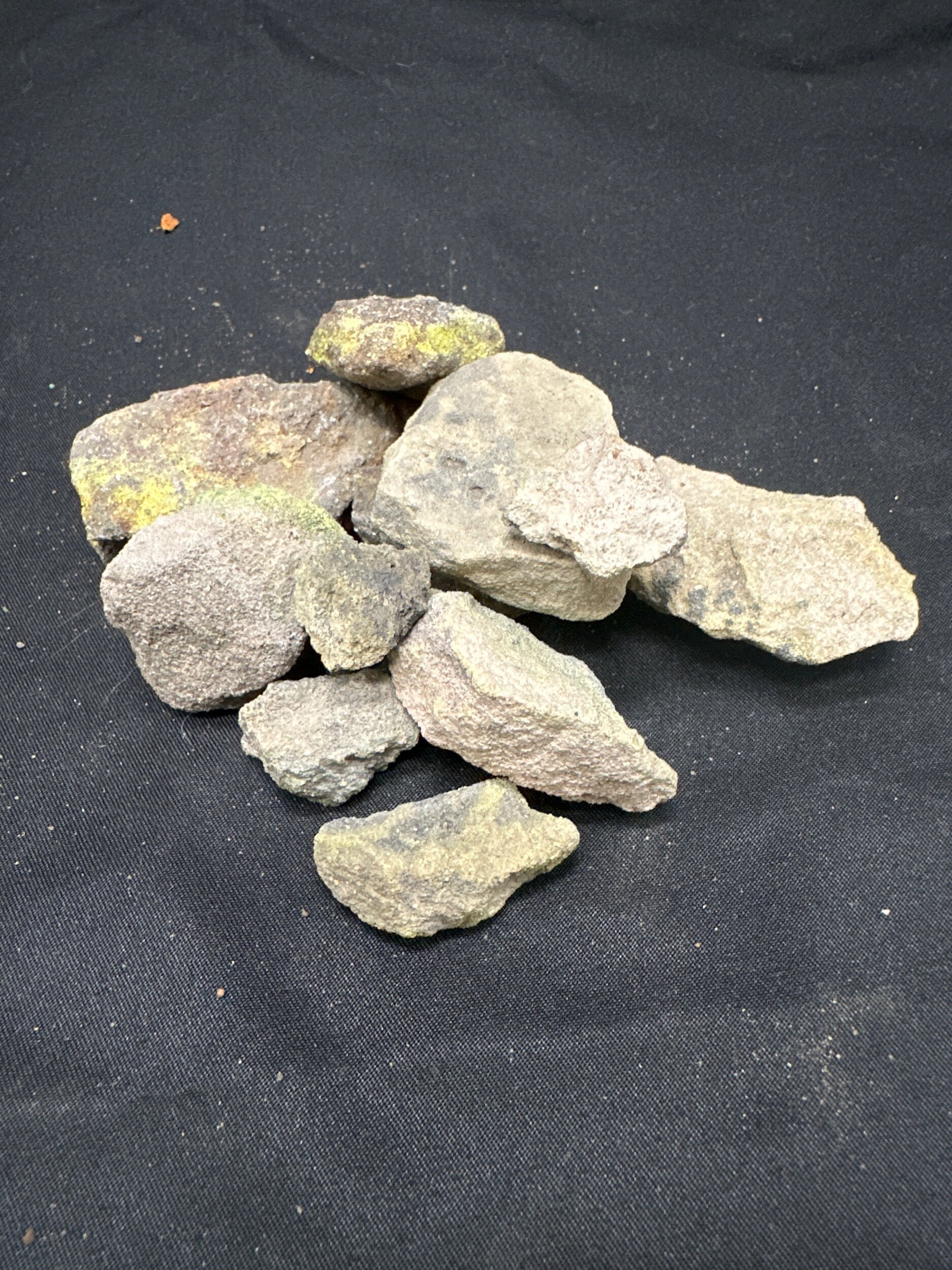
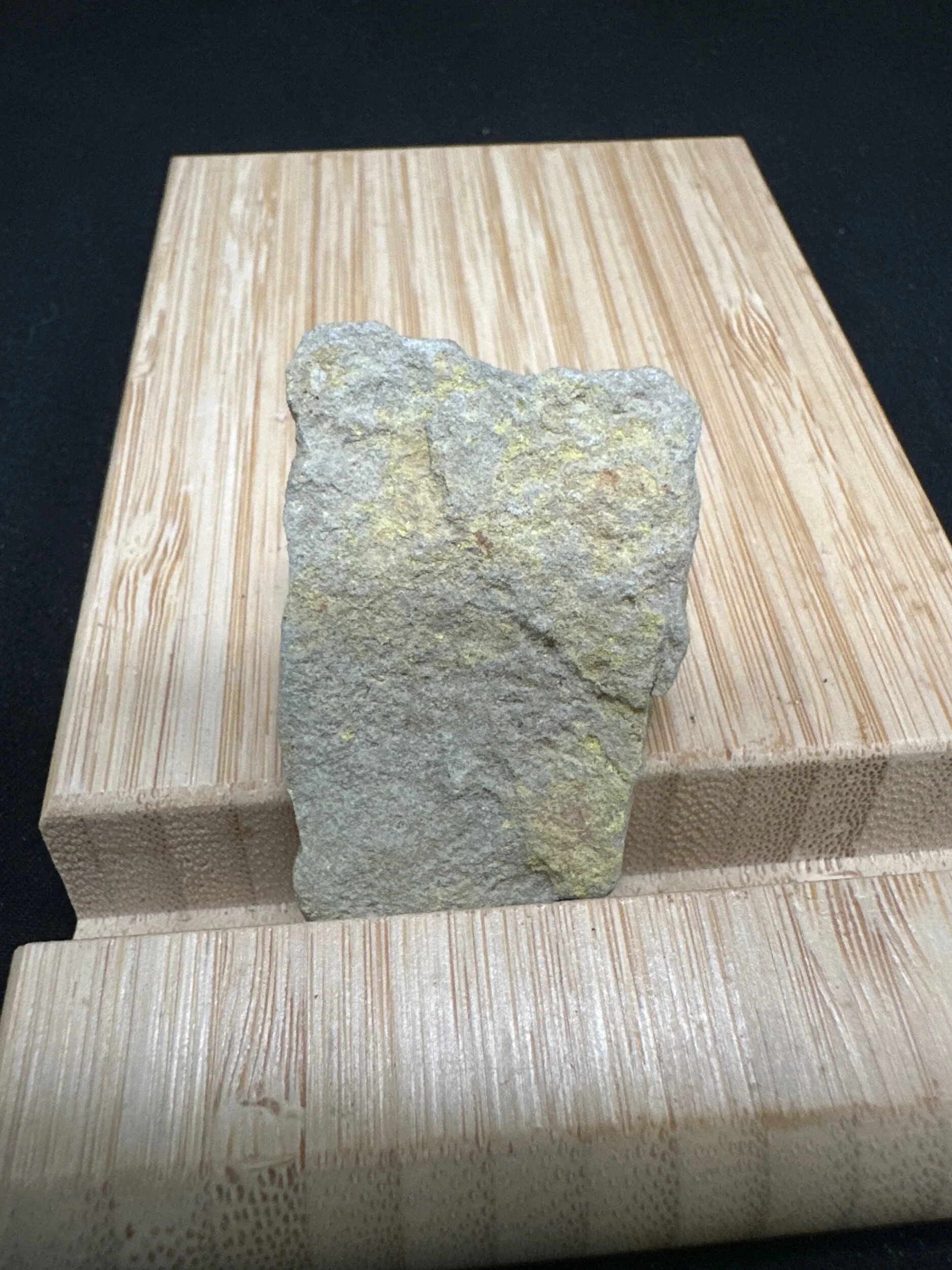
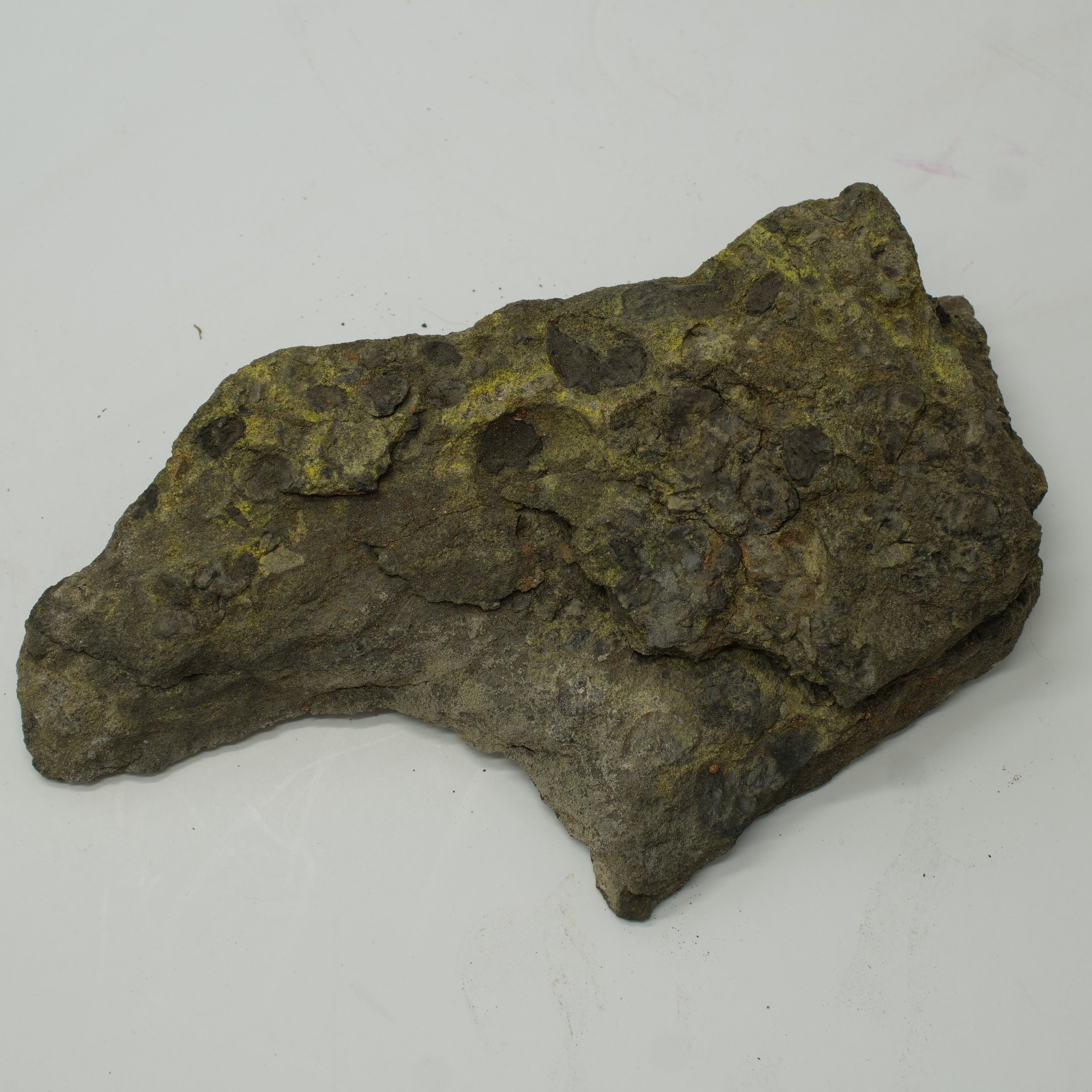
This is a large, thin uranium ore slab displaying classic Colorado Plateau secondary uranium mineralization developed across a broad sandstone surface. The specimen shows muted yellow-green uranium staining with scattered darker reduced patches, consistent with carnotite / tyuyamunite-group uranium vanadates, with probable minor uraninite remnants preserved as darker nodular zones.
Unlike chunky display pieces, this slab-like geometry offers excellent surface exposure, making the uranium mineralization easy to study and visually interpret. At 25,000 CPM, activity is strong and evenly distributed across the specimen rather than confined to a single hot spot, making it ideal for educational use and CPM mapping demonstrations.
Weight: 1 lb 11 oz (≈ 765 g)
Dimensions: approx. 7.5 × 4.5 × 1.5 inches (≈ 19 × 11.4 × 3.8 cm)
Locality: Utah, USA (Colorado Plateau region)
Condition: Natural, unprocessed, no stabilization or enhancement
Measured Activity: ~25,000 CPM
Instrument: Pancake Geiger probe
UV Response: None observed
Shipping: Ships legally under UN 2910 – Excepted Radioactive Material
⚠️ Radiation Notice:
This specimen emits measurable ionizing radiation. Avoid prolonged handling and display appropriately.
Geologic context: Utah sandstone-hosted uranium deposits formed when uranium-bearing groundwater precipitated secondary uranium minerals along permeable bedding planes—well illustrated by this slab.
Non-uranium minerals: Iron oxides (goethite/limonite), sandstone matrix
Activity level: Strong relative to thickness
Best use cases:
Educational surface-area demonstration
CPM scanning and comparison
Display where footprint matters more than height
Best for:
Uranium collectors wanting broad mineral exposure
Educators and demonstrators
Element collectors seeking a clear uranium-bearing rock
This is a large, thin uranium ore slab displaying classic Colorado Plateau secondary uranium mineralization developed across a broad sandstone surface. The specimen shows muted yellow-green uranium staining with scattered darker reduced patches, consistent with carnotite / tyuyamunite-group uranium vanadates, with probable minor uraninite remnants preserved as darker nodular zones.
Unlike chunky display pieces, this slab-like geometry offers excellent surface exposure, making the uranium mineralization easy to study and visually interpret. At 25,000 CPM, activity is strong and evenly distributed across the specimen rather than confined to a single hot spot, making it ideal for educational use and CPM mapping demonstrations.
Weight: 1 lb 11 oz (≈ 765 g)
Dimensions: approx. 7.5 × 4.5 × 1.5 inches (≈ 19 × 11.4 × 3.8 cm)
Locality: Utah, USA (Colorado Plateau region)
Condition: Natural, unprocessed, no stabilization or enhancement
Measured Activity: ~25,000 CPM
Instrument: Pancake Geiger probe
UV Response: None observed
Shipping: Ships legally under UN 2910 – Excepted Radioactive Material
⚠️ Radiation Notice:
This specimen emits measurable ionizing radiation. Avoid prolonged handling and display appropriately.
Geologic context: Utah sandstone-hosted uranium deposits formed when uranium-bearing groundwater precipitated secondary uranium minerals along permeable bedding planes—well illustrated by this slab.
Non-uranium minerals: Iron oxides (goethite/limonite), sandstone matrix
Activity level: Strong relative to thickness
Best use cases:
Educational surface-area demonstration
CPM scanning and comparison
Display where footprint matters more than height
Best for:
Uranium collectors wanting broad mineral exposure
Educators and demonstrators
Element collectors seeking a clear uranium-bearing rock